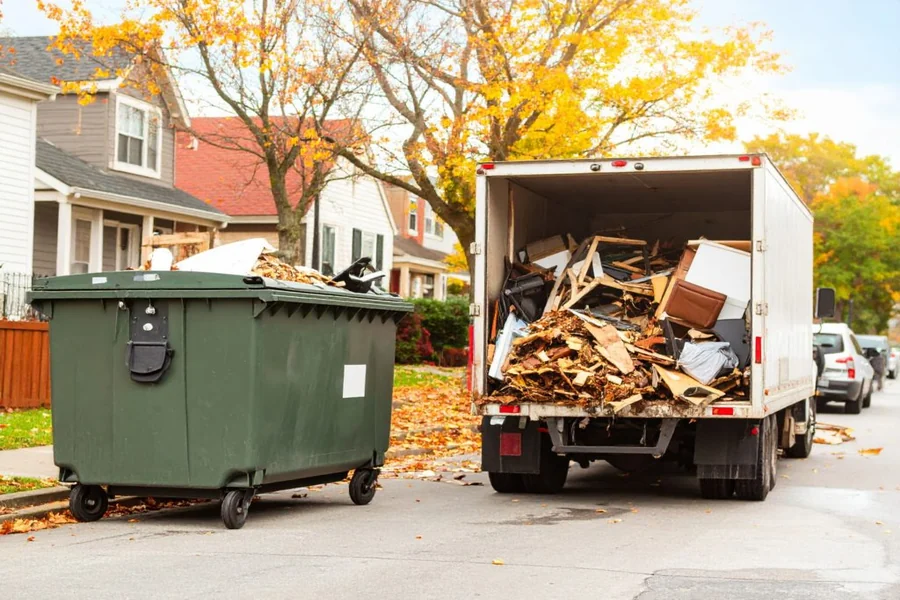
A dumpster is a temporary, obvious, and slightly ugly addition to a street, and the rules that govern it are mostly about everyone else: the municipality that owns the road, the homeowners association that polices the look of the block, the neighbor whose view it blocks, the kids who think it is a climbing structure, and the stranger who sees an unattended container as a free place to dump a mattress. A rental that ignores those parties can produce a citation, a fine, a complaint, an injury, or a load full of someone else’s trash.
None of that is difficult to prevent. This guide covers the rules and the courtesies in the order they come up: where the container can legally sit, what an HOA can require, how to keep the peace with neighbors, how to keep the container safe, and how to make sure the only thing in it at pickup is what the renter put there.
Where the Container Can Legally Sit
The first question is whether the container is on private property or public right-of-way, because the rules are entirely different.
Private driveway or yard
On the renter’s own property, most municipalities require no permit and impose no time limit. The container can sit in the driveway, on a parking pad, or in the yard for the length of the rental. This is the default placement and the one that avoids nearly every regulatory question.
Public street
If the container must sit on the street, in the parking lane or at the curb, the renter is placing an object in the public right-of-way, and most municipalities require a permit for that. Permits typically specify the allowed location, the number of days, and sometimes required markings such as reflective tape or cones. Some cities prohibit street placement entirely on certain roads, and most restrict it during snow emergencies when plows need the lane.
The rental company can usually say whether a permit is needed at a given address, but the permit itself is the renter’s responsibility and should be obtained before delivery. A container placed on a street without a required permit can be ticketed, and in some jurisdictions towed, at the renter’s expense.
Shared driveways and easements
A container on a shared driveway blocks the neighbor who shares it. Permission in advance is both a courtesy and, in many cases, a legal requirement under the easement. The same applies to any placement that crosses a property line.
What an HOA Can Require
Homeowners associations commonly regulate dumpsters, and the rules vary widely. Typical provisions include:
- Advance notice or written approval before a container is placed
- A maximum number of days on site, sometimes shorter than the rental company’s standard window
- Placement restrictions, such as driveway only, not visible from the street, or not on common areas
- A requirement that the container be covered or kept below the rim
- Prohibitions during certain periods, such as holidays or community events
The practical step is to read the covenants or call the management company before booking, and to get any approval in writing. HOA fines for an unapproved container can exceed the cost of the rental, and they accumulate daily.
Keeping the Peace With Neighbors
No rule requires a renter to tell the neighbors, but the renters who do rarely have problems and the ones who do not sometimes do. A short conversation covers three things.
- What is coming and for how long. A neighbor who knows the container will be gone by Saturday is far less likely to complain than one who assumes it is permanent.
- Where it will sit. If placement affects the neighbor’s parking, sightline, or access, that is the moment to find out.
- What happens to the street. A delivery truck backing into a driveway and a pickup truck lifting a loaded container both occupy the street briefly, and a neighbor whose car is parked in the way will be asked to move it.
Two courtesies go a long way: keeping the load below the rim so nothing is visible or at risk of blowing out, and arranging pickup promptly when loading is done rather than leaving a full container on display for extra days.
Safety: Children, Animals, and the Container Itself
A dumpster is an attractive nuisance in the legal sense: an object that draws children and that can injure them. A few precautions address the risk.
- Keep the load level and the sides clear. Debris piled above the rim, or leaning against the outside, invites climbing and can fall.
- Never store sharp or hazardous items where they are reachable. Broken glass, exposed nails in lumber, and anything with an edge should be loaded deep and covered with other material, not left on top.
- Cover the container when it is unattended. A tarp over the top keeps children and animals out, keeps rain out of the load, and keeps loose debris from blowing into the street. Most providers allow it.
- Keep the area around it clear. Debris staged on the ground beside a container becomes a tripping hazard for anyone walking past, including the renter.
- Mind the loading. Heavy items go in first and low; nothing is thrown over the side where it can land on someone on the other side; and nobody climbs into a container to rearrange a load without someone else present.
Preventing Unauthorized Dumping
An open container at the end of a driveway is, to some passersby, an invitation. Mattresses, tires, bags of household trash, and occasionally things far worse appear overnight in rented dumpsters, and the renter pays for their disposal, including any special-item fees and any weight overage they cause.
Prevention is straightforward:
- Place the container as far from the street as the driveway allows, where it is visible from the house and less visible from the road.
- Cover it with a tarp whenever it is not actively being loaded.
- If the rental is long or the neighborhood is busy, a motion-activated light aimed at the container discourages night visits.
- Check the load each morning. If something has been added, photograph it and notify the provider before pickup, so the renter is not charged for an item they did not load and the provider can advise on handling.
A provider that quotes a flat rate with a stated allowance and named special-item fees makes it easy to identify when an unauthorized item has changed the bill, which is one more reason to prefer that pricing model. In the Southern Tier of New York, Morse Hauling & Junk Removal runs its dumpster rental service on that basis, with one flat rate covering delivery, a multi-day window, pickup, and a set disposal allowance, special-item fees listed in advance so they can be disclosed at booking, driveway placement by the driver at the spot the renter chooses without surface damage, and a request that the renter call or text when loading is finished so pickup is prompt rather than leaving the container on display. The company is fully insured and serves Elmira, Horseheads, Elmira Heights, Corning, Ithaca, and nearby towns. Whatever provider is used, the renter’s part is the same: private placement where possible, a permit where it is not, HOA approval in writing, a word with the neighbors, a tarp over the top, and a prompt call for pickup.
A Neighborhood Rental Checklist
- Confirm placement is on private property; if the street is unavoidable, obtain the municipal permit before delivery.
- Read the HOA covenants or call management, and get approval in writing.
- Get permission for any placement on a shared driveway or across a property line.
- Tell the adjacent neighbors the dates, the placement, and what the delivery and pickup involve.
- Place the container as far from the street as the driveway allows.
- Keep the load level with the rim, sharp items buried, and the ground around it clear.
- Cover the container with a tarp whenever it is unattended.
- Check the load each morning for anything added overnight; photograph and report it.
- Call for pickup as soon as loading is done.
Key Takeaways
- A container on private property rarely needs a permit; one on a public street almost always does, and the permit is the renter’s job.
- HOAs commonly require notice or approval and may limit days and placement; fines can exceed the rental cost.
- A brief conversation with neighbors prevents most complaints.
- Keep the load level, bury sharp items, cover the container when unattended, and keep the surrounding ground clear.
- Unauthorized dumping is prevented by placement, a tarp, light, and a daily check; report anything added before pickup.
Frequently Asked Questions
Do I need a permit to put a dumpster in my driveway?
In most municipalities, no. A container on private property is generally unregulated. A container on a public street almost always requires a permit, obtained by the renter before delivery.
Can my HOA stop me from renting a dumpster?
Most HOAs regulate rather than prohibit dumpsters, requiring notice or approval and limiting days and placement. Check the covenants and get approval in writing to avoid daily fines.
What if someone dumps their trash in my rented dumpster?
The renter is typically charged for whatever is in the container at pickup. Photograph the added items, notify the provider before pickup, and prevent recurrence with a tarp, a motion light, and placement away from the street.
Is it safe to have a dumpster where children play?
With precautions, yes. Keep the load level, bury sharp items, cover the container when unattended, and keep the area around it clear. Treat it as something children will try to climb, because they will.
Should I tell my neighbors about the dumpster?
It is not required, but it prevents most complaints. A short notice of the dates, the placement, and the delivery and pickup is enough.
Can I put a dumpster on the street in front of my house?
Often, with a municipal permit that specifies location and duration. Some streets prohibit it, and most restrict it during snow emergencies. Private placement is simpler whenever the driveway allows.
Conclusion
A dumpster rental in a neighborhood is a short negotiation with everyone who shares the street: the city, the association, the neighbors, and the people and animals who will walk past it. The renter who settles placement and permits before delivery, tells the neighbors, keeps the container safe and covered, and calls for pickup promptly has met every one of those parties on good terms. The container does its job, the block barely notices, and the only thing hauled away at the end is what the renter meant to send.