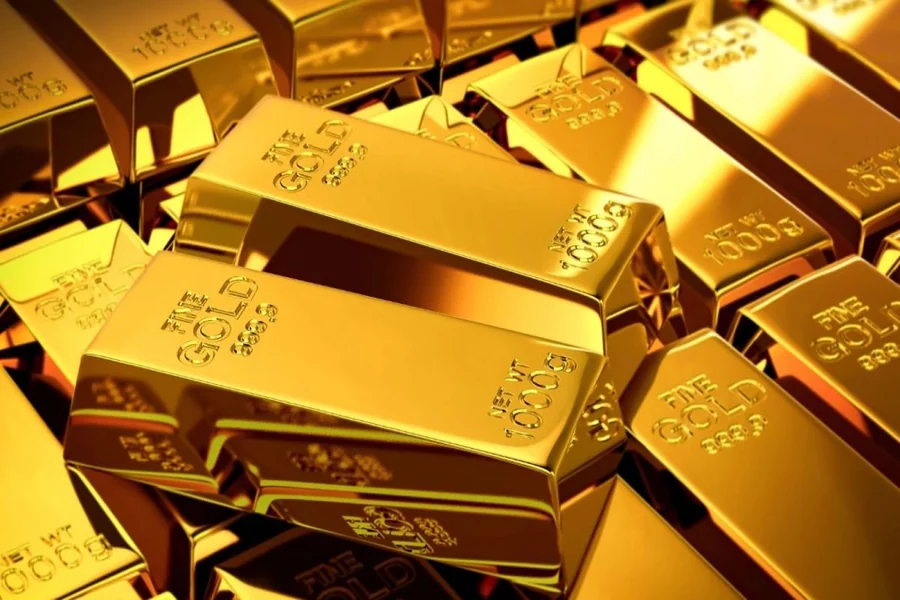
On May 10, 2026, Prime Minister Narendra Modi said something that surprised most Indians. At a public event in Hyderabad, he asked citizens to stop buying gold for at least one year. He didn’t frame it as financial advice. He called it a matter of national duty. “Patriotism is not only about the willingness to sacrifice one’s life on the border,” he said. “In these times, it is about living responsibly and fulfilling our duties to the nation in our daily lives.”
So what’s going on? Why would the Prime Minister ask a gold-loving nation to stop buying gold? The answer lies in one word: dollars.
India’s Problem With Gold Imports
India produces very little gold domestically, so the vast majority of the gold Indians buy is imported and paid for in US dollars. In the 2025–26 financial year alone, India spent nearly $72 billion on gold imports, making gold one of the country’s largest import expenses and a significant contributor to the trade deficit.
At the same time, tensions in the Middle East pushed crude oil prices sharply higher. Since India imports nearly 85% of its crude oil requirements and pays for them in US dollars, a rising oil bill added pressure to the country’s foreign exchange position. India’s forex reserves fell from a record $728.5 billion in February 2026 to $690.69 billion by May 1, while the rupee came under pressure, prompting the RBI to intervene in the currency market through dollar sales.
Here’s a simple breakdown of what’s draining India’s forex:
| Import Category | FY 2025–26 Value | Position |
| Crude Oil | ~$123 billion | Largest contributor |
| Gold | $72 billion | Second largest |
| Foreign Travel | ~$31.7 billion | Third |
PM Modi’s logic was straightforward: if Indians buy less gold, fewer dollars leave the country, reserves stabilise, and the rupee gets breathing room. Every gram of gold that isn’t imported is one less dollar spent.
The Contradiction: RBI Is Buying Gold Too
Here’s where things get interesting. While Modi was asking citizens to stop buying gold, the Reserve Bank of India was quietly doing the opposite.
India’s sovereign gold holdings grew from 794.64 metric tonnes in September 2025 to 880.52 metric tonnes by March 2026. Gold’s share of India’s total forex reserves jumped from 13.92% to 16.7% in the same period. The RBI Governor had previously stated openly: “We are building up gold reserves, that is part of our reserve deployment.”
This isn’t hypocrisy. There’s an important distinction. The RBI buys gold as a planned strategic reserve, a hedge against global uncertainty. Retail gold imports, on the other hand, are unplanned, demand-driven, and paid for in dollars every time a family buys jewellery or coins. It’s the retail import pressure that Modi wants to reduce, not the country’s sovereign gold strategy.
Will It Work? History Suggests It’s Not That Simple
This is not the first time an Indian government has tried to reduce gold demand. In 2013, Finance Minister P. Chidambaram made similar appeals when the current account deficit was at a crisis-level 4.8% of GDP. Import duties were raised. Gold Monetisation Schemes and Sovereign Gold Bonds were launched to redirect demand toward paper gold.
The results were limited. Indians kept buying gold. In 2024, India consumed 802.8 tonnes, the highest since 2015.
The government has already raised import duty on gold by 10%, but it cannot legally stop people from buying. And culturally, gold runs deep in India: weddings, festivals, family savings, distrust of financial markets. A speech is unlikely to override generations of behaviour. The IMF projects India’s CAD will hit $84 billion in 2026. The pressure is real. But the solution needs to go beyond asking people to buy less.
A Smarter Idea: Put Existing Gold to Work
Here’s a fact that rarely comes up in this debate. India already holds an estimated 25,000 tonnes of gold in household lockers. That gold has already been imported. The dollars have already been spent. It is sitting completely idle, doing nothing for the economy and generating zero returns for its owners.
What if that gold could be put back into the domestic economy without importing a single gram more?
That’s exactly what gold leasing does. When idle household gold is leased to jewellers and manufacturers who actually need it, it circulates within India’s domestic gold industry. Those businesses don’t need to source new gold from imports. Existing gold does the job. Every gram that’s leased and reused is one gram that doesn’t need to be imported fresh, which means fewer dollars going out.
For the individual, gold leasing also means their gold as an investment is no longer just sitting there. It’s earning up to 3-5% per annum in additional gold weight as rental income, on top of whatever gold prices do. The gold stays theirs. They just stop letting it sit idle.
How myGold Makes This Possible?
myGold is India’s first platform that enables individual investors to lease both physical and digital gold. If you have jewellery, coins, or bars sitting in a locker, you can lease them through myGold to trusted jewellers, earning up to 5% per annum in gold weight as rental income. Your gold stays yours throughout, backed by a legal lease agreement on stamp paper and stored in insured vaults. There is no lock-in period, so you can access your gold whenever you need it.
For those who want to keep accumulating gold as an investment through a monthly SIP, myGold allows that digital gold to go on lease immediately, earning from day one, not just from price appreciation.
In the context of PM Modi’s appeal, gold leasing is one of the most constructive things an Indian gold owner can do. It keeps existing gold circulating inside the country, reduces pressure on fresh imports, and earns you returns in the process.
Bottom Line
PM Modi’s concern is legitimate. India’s forex reserves are under pressure, gold imports are a major contributor, and every dollar saved matters right now. But asking people to stop buying gold is unlikely to work on its own; Indians have been buying gold through wars, recessions, and government advisories for generations.
The more practical answer is to make the gold already in India work harder. Idle gold in lockers isn’t helping the economy or the individual who owns it. Gold leasing puts it back into circulation, reducing the need for new imports while letting Indian households earn returns on what they already own. That’s not just good financial sense. Right now, it might be the most useful thing an Indian gold owner can actually do.