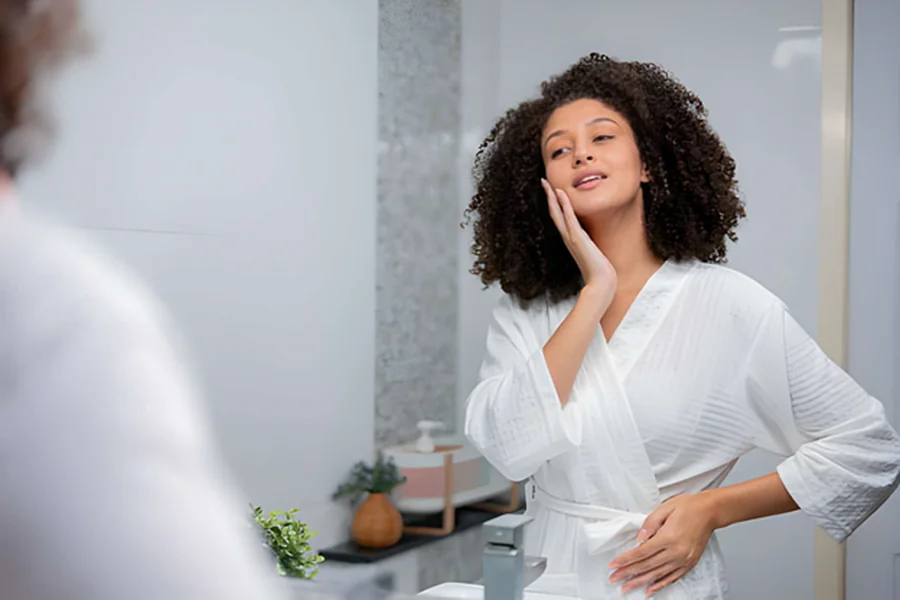
There’s a specific kind of confidence that shows up when your leave-out blends so well you forget it’s even there. You stop checking mirrors, adjusting in sunlight, or tilting your head in photos. That’s the power of a seamless kinky curly blend—it shifts your focus from “does this look real?” to simply enjoy how you look. As U-part wigs and leave-out installs continue trending across the U.S., the appeal is clear: when done correctly, they offer one of the most natural, camera-ready finishes while still respecting the health of your mane. This guide breaks down the technique, protection, and mindset behind mastering the leave-out blueprint—so your tresses look authentic from every angle.
Choosing a Natural-Texture Match That Mimics Your Own Curls
Natural hair textures aren’t uniform—and that’s exactly what makes kinky curly installs so believable when matched correctly. Realistic volume, slight irregularity, and soft density shifts are what convince the eye that curls are growing straight from the scalp. Among many textured options, choosing the Best Kinky Curly Human Hair Weave comes down to how closely it mirrors untreated natural curls in shrinkage, coil diameter, and movement.
When testing blends, I always compare damp curls—not stretched ones. If your leave-out coils spring up quickly after water, your extensions should do the same. In my own wear tests, the best matches required minimal manipulation even on humid days or after gym sessions. Detangling time stayed under 10 minutes, and the crown didn’t puff separately from the rest of my mane—a major win for realism.
Quick texture-matching tips:
- Compare curl size when both your leave-out and extensions are fully wet
- Choose slightly denser extensions if your natural tresses are thick at the crown
- Avoid overly uniform curl patterns—they photograph flat
Understanding Leave-Out Limits (and Protecting Your Edges)
Leave-out success isn’t about how much hair you show—it’s about how well you protect what’s exposed. As a rule, anything wider than two fingers at the part is usually too much, especially for finer edges or fragile temples. Excess leave-out increases tangling, dryness, and daily manipulation.
To protect my edges, I prep the leave-out like a mini protective style. Lightweight leave-in, followed by a botanical gel or curl cream, keeps the curls defined without crunch. At night, I section just the leave-out and lightly twist it before covering my entire style with a satin bonnet. This one habit reduced crown matting dramatically.
To prevent tangling where the leave-out meets the install:
- Keep both textures moisturized at the same level
- Detangle from ends upward using fingers first
- Avoid heavy butters at the crown (they attract lint)
Beginner-Friendly Blending with a Kinky Curly U-Part Option
If you want realism without committing to a full sew-in, a Kinky Curly U Part Wig is one of the most beginner-friendly ways to master leave-out styling. It allows you to control exactly how much of your natural tresses are exposed while offering flexibility in part placement.
U-part styles are different from sew-ins in two keyways. First, they don’t require braiding down your entire head—meaning less tension. Second, removal is quicker, making them ideal for balancing protective styling with frequent wash days. In my experience, the most natural results come from positioning the U opening slightly off-center rather than directly down the middle, which mimics how hair naturally falls.
Heat-free blending is possible here. I rely on twist-outs or braid-outs on my leave-out, then fluff gently to match the extension curl shape. No flat irons, no blow dryers—just patience and hydration.
Part Placement, Curl Matching, and Blending Short 4C/4B Leave-Out
The most realistic leave-out styles start with thoughtful part placement. Slight side parts or soft zig-zag parts diffuse the eye, making the blend harder to detect. Straight middle parts tend to expose too much scalp unless executed perfectly.
For a short 4C/4B leave-out, shrinkage is your biggest challenge—but also your advantage. Stretch your leave-out slightly using banding or African threading before styling, then let it recoil naturally. This creates a fuller transition between your hair and the added curls.
Blending checklist for tight textures:
- Style leave-out and extensions together (same wash, same products)
- Blend in natural light, not just bathroom lighting
- Avoid over-defining only one section—uniform imperfection looks real
From experience, I’ve found that once the curl sizes are close, the eye stops separating “my hair” from “added hair.” That’s when the confidence clicks in.
FAQs: Leave-Out Blending, Answered
What is a U-part wig and how is it different from a sew-in?
A U-part wig leaves a U-shaped opening for your natural hair, while a sew-in typically covers the entire head. U-parts offer easier removal and less tension.
How much leave-out is too much?
Anything beyond a narrow part or small crown section risks damage and tangling. Less is more.
Can I blend without heat damage?
Yes. Curl sets, twist-outs, and proper hydration eliminate the need for heat entirely.
What’s the best part of placement for realism?
Slight side parts or irregular parts look more natural than sharp middle parts.
How do I prevent crown tangling?
Match moisture levels, detangle gently, and protect your style nightly.