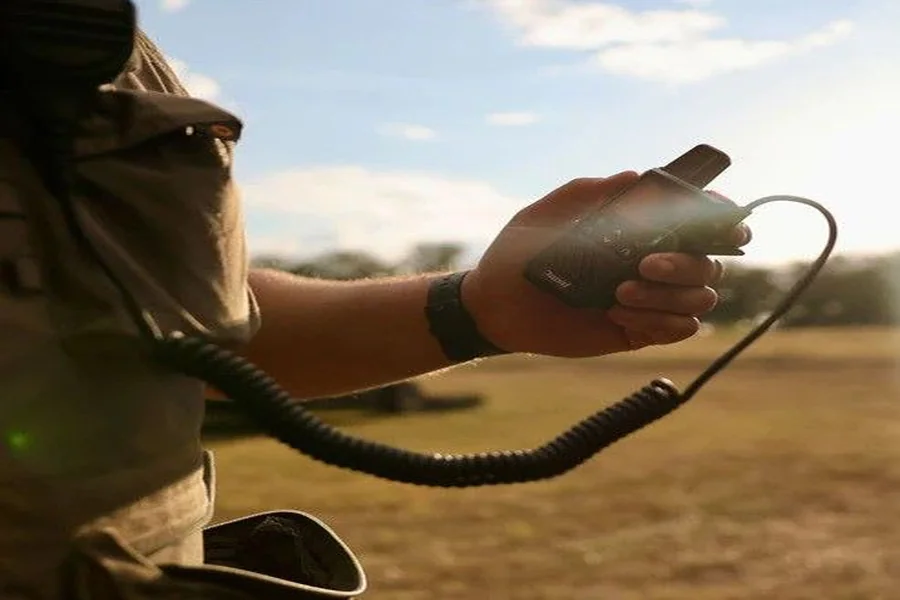
You don’t really think about range, until you lose it.
One minute you’re mid-conversation. The next? Silence. Maybe a crackle. Maybe nothing at all.
“Did you catch that?”
Nope.
In 2026, that kind of breakdown feels… avoidable. Because modern walkie-talkies aren’t what they used to be. They’ve evolved, quietly, but significantly, and the gap between outdated models and current systems is wider than most people realize.
So if you’re choosing a long-range device today, what actually matters?
Let’s break it down.
1. Nationwide (Not Just “Long-Range”) Coverage
Here’s the first thing to rethink: “long-range” doesn’t mean miles anymore.
Traditional radios measure distance in ideal conditions, flat terrain, no interference, perfect weather. Real life? Not so generous.
Modern walkie-talkies bypass that limitation entirely.
Instead of relying on line-of-sight, they use nationwide cellular or network-based connectivity. That means your communication range isn’t capped at a few miles, it stretches across cities, states, even the entire country.
So the real question isn’t “How far can it go?”
It’s “Does it work wherever I am?”
2. Instant Push-to-Talk (Without Lag)
Speed is the whole point.
If there’s a delay between pressing the button and being heard, the system starts to feel… off. Slow. Clunky.
The best walkie-talkies in 2026 deliver near-instant PTT response. No dialing. No connection time. No awkward pause where you’re not sure if the other person is hearing you.
You press. You speak. It lands.
That immediacy is what separates true communication tools from everything else pretending to be one.
3. Clear Audio in Noisy Environments
Let’s be honest, most environments where you use a walkie-talkie aren’t quiet.
Construction sites. Warehouses. Roads. Events.
Noise is constant.
Older systems struggle here. Static, distortion, overlapping signals, it all adds friction.
Modern devices use digital audio processing and noise reduction to cut through that. Voices come through clean, even when the environment isn’t.
And clarity isn’t just about convenience.
It’s about not having to repeat yourself five times just to get a simple message across.
4. Durability That Matches Real Use
Specs are one thing. Reality is another.
Devices get dropped. Exposed to dust. Caught in the rain. Used with gloves. Knocked around without much thought.
A long-range walkie-talkie in 2026 needs to handle all of that without failing.
Look for:
- Rugged, impact-resistant design
- Water and dust resistance (high IP ratings)
- Physical buttons that work in real conditions
Because a device that only works when handled carefully… doesn’t really work.
5. Easy Scaling and Group Communication
Here’s something people often overlook: growth.
Maybe you’re starting with a small team. But what happens when that team doubles? Or spreads across locations?
Traditional systems get messy fast, more channels, more interference, more confusion.
Modern walkie-talkies handle scaling cleanly.
You can add users without rebuilding your setup. Organize channels by team, role, or location. Communicate with groups instantly without cluttering every conversation.
It stays structured, even as things grow.
And that’s what keeps communication usable over time.
So… What Does the “Best” Actually Look Like?
It’s not about one feature.
It’s the combination.
Nationwide coverage. Instant communication. Clear audio. Real durability. Scalable systems.
Devices like the learn more option bring those elements together, modern connectivity wrapped in a familiar, easy-to-use format.
Because the best tools don’t just add features.
They remove problems.
Final Thought: Range Is Just the Beginning
In 2026, “long-range” isn’t impressive on its own.
It’s expected.
What matters now is how well a device performs beyond that, how quickly it connects, how clearly it communicates, how reliably it holds up in real conditions.
A modern walkie-talkie isn’t just about distance anymore.
It’s about making sure distance doesn’t matter at all.