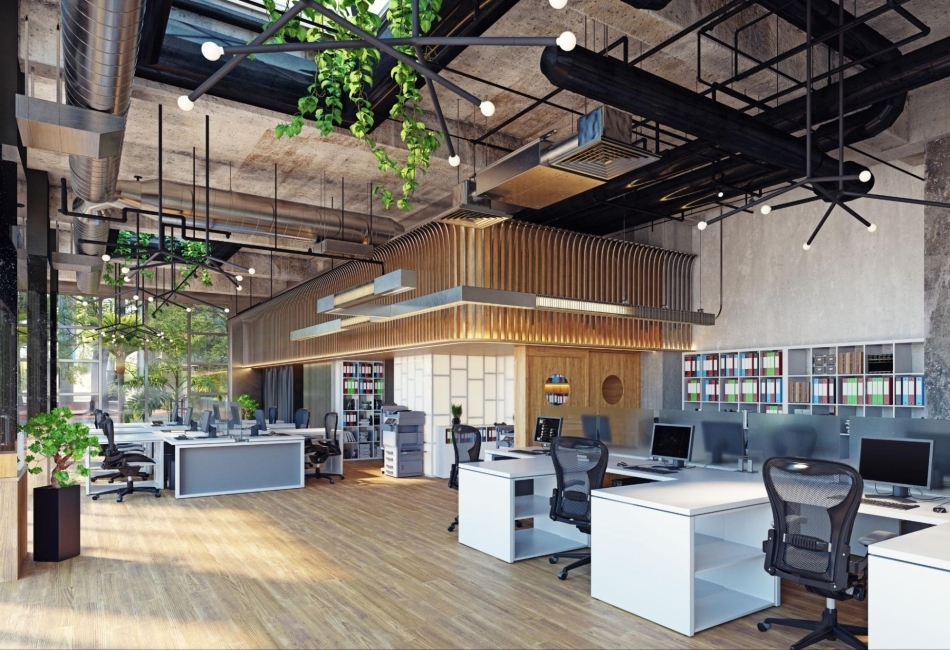
Urban life is loud. Messy. Fast. It never really stops moving, and neither do the people trying to live and work in the middle of it. For businesses operating in cities like Mumbai, this unpredictability isn’t just a background hum—it’s a daily reality. Traffic congestion, unpredictable weather, civic disruptions, infrastructure strain… it all piles on. And yet, through all of this, the office has to stay open. Teams need to feel energised. Clients still walk in expecting professionalism and polish.
So, how do you create commercial interiors that hold steady while the world outside shifts and shakes? That’s the million-dollar question.
The answer? Thoughtful, flexible design. Not just stylish, not just functional—but resilient. And it starts with understanding urban volatility for what it is.
What Do We Mean by “Urban Volatility”?
Urban volatility isn’t one thing. It’s many things happening at once:
- Environmental stressors: heat waves, monsoons, flooding
- Human pressure: overcrowding, footfall, noise levels
- Infrastructure inconsistencies: power cuts, water shortages, erratic maintenance
- Civic unpredictability: road closures, construction, political rallies, strikes
All of these can impact how an office function—sometimes all in one week. And unlike a suburban office park with calm surroundings and ample space, city-centre workplaces have to build resilience into their very bones.
Design That Anticipates, Not Just Reacts
The best commercial spaces in cities aren’t designed to withstand damage—they’re designed to avoid disruption. It’s a subtle but powerful shift in thinking. And it starts at the very beginning.
When office interior designers approach an urban project, their brief is about more than visual aesthetics. It’s about behavioural foresight. Who’s using the space? When? What’s happening outside the building that could affect operations inside it?
An office in Lower Parel, for instance, may need air quality filtration more urgently than one in a quieter suburb. One near a metro line may need enhanced soundproofing to keep meeting rooms client-ready. These aren’t nice-to-haves—they’re table stakes.
Flexible Layouts: The Non-Negotiable
If the pandemic taught us anything, it’s that flexibility is survival. And in a volatile urban setting, it’s even more critical.
Commercial interiors need to adapt on demand.
- A boardroom becomes a breakout area.
- Desks can be reconfigured overnight to suit new team structures.
- A lounge area moonlights as a waiting space when the lift’s broken again.
This level of adaptability requires more than clever furniture. It demands modular design thinking. Lightweight partitions, easy-to-move fixtures, plug-and-play power points—every element should move with the moment.
Many office interior designers in Mumbai are leading the way in this, given the city’s famously dense workspaces and rapidly shifting business requirements.
Build for Durability, Not Just Decor
Let’s be honest—some surfaces look great on day one but can’t survive the daily bustle of a high-footfall office near CST or Andheri. You want beautiful design, of course. But it needs to last.
Urban volatility puts stress on materials. Flooring gets hammered. Upholstery stains. Paint scuffs. And in cities where maintenance crews may take a while to respond—or where damage risks spike in monsoon season—your choices need to reflect that.
Designers worth their salt don’t just pick what’s trending. They pick what works hard.
- Anti-slip tiles that handle water and dust
- Upholstery that resists mould during humid months
- Walls finished with washable, high-durability paint
- Fixtures that don’t warp when temperatures spike
Sustainable materials aren’t just eco-conscious. They’re urban-proof.
Smart Systems for Smarter Cities
Technology plays a huge role in mitigating volatility. Think automated blinds that adjust for heat gain. Smart lighting that adapts to occupancy and natural daylight. Ventilation systems that purify air during pollution surges.
But “smart” doesn’t just mean connected. It means intuitive. Systems should enhance comfort without relying on daily manual adjustment.
- Power outages? Your backup systems need to kick in immediately.
- Water leaks? Early detection sensors save the day.
- Security threats? Remote access and smart lockdown protocols should already be part of the design conversation.
It’s no longer a bonus to think this way—it’s a baseline. Clients expect it. And employees need it.
Designing for Mental Space in a Chaotic City
Let’s not forget the human element. Cities can be overwhelming, and burnout is very real in high-pressure environments. A good office interior doesn’t just shield you from urban chaos—it gives your brain a place to breathe.
That could mean:
- Calming breakout zones with acoustic dampening
- Biophilic design that brings natural textures and greenery indoors
- Visual cues that reduce mental fatigue—think softer lighting, warmer tones
- Layouts that encourage flow and reduce stress congestion during peak hours
In other words, spaces that don’t just look calm but feel calm, even if there’s a traffic jam honking just outside.
Site-Specific Planning = Long-Term Payoff
There’s a reason local expertise matter. A designer unfamiliar with a neighbourhood’s quirks might not plan for the drainage quirks of a ground-floor space in Kurla or the elevator unreliability in a 1980s Bandra high-rise.
The best office interior designers in Mumbai design with context in mind. They walk the space, ask the right questions, check the sun path, and check with the building secretary (yes, really). It’s not just about designing for the brand—it’s about designing for reality.
Because it’s better to spend two extra weeks planning than six months reworking.
A Word on Culture and Client Experience
Volatility isn’t just physical—it’s emotional. People feel the stress of unpredictability. And clients, especially in high-stakes sectors, pick up on it too.
A well-designed commercial interior sends a message: We’ve thought this through. We’re ready for change. We’re stable—even when things outside aren’t.
It communicates reliability without saying a word. That’s powerful brand reinforcement.
Resilience Is the Real Luxury
At the end of the day, the most valuable thing a commercial interior can offer in an unpredictable city? Resilience. It’s not about gold-plated reception desks or imported Italian flooring. It’s about the space still functioning, beautifully and confidently, when the city throws another curveball.
So when planning your next space, ask not just “Does this look good?” but “Will this last in the real world?”